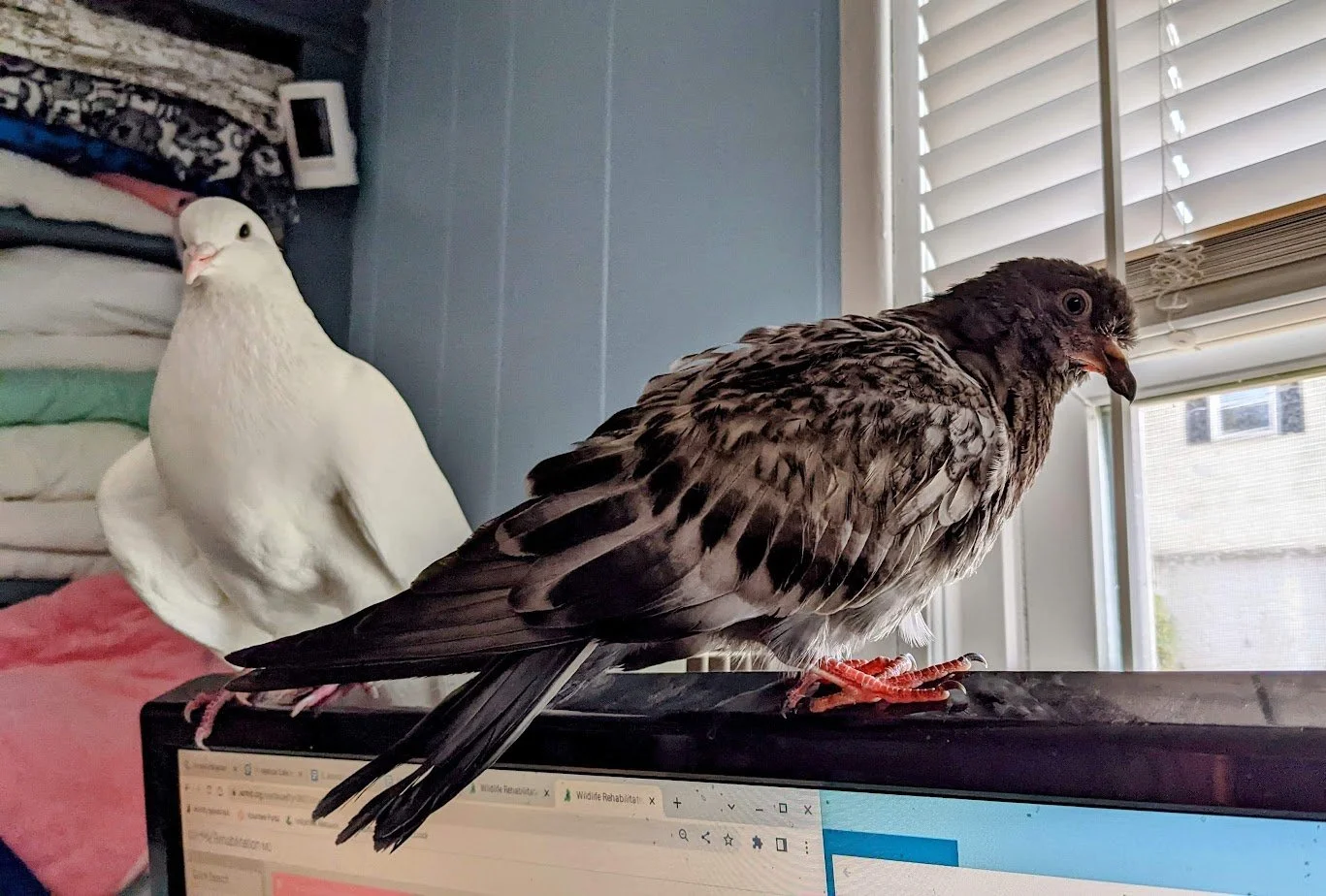
Buddy the Rock Pigeon
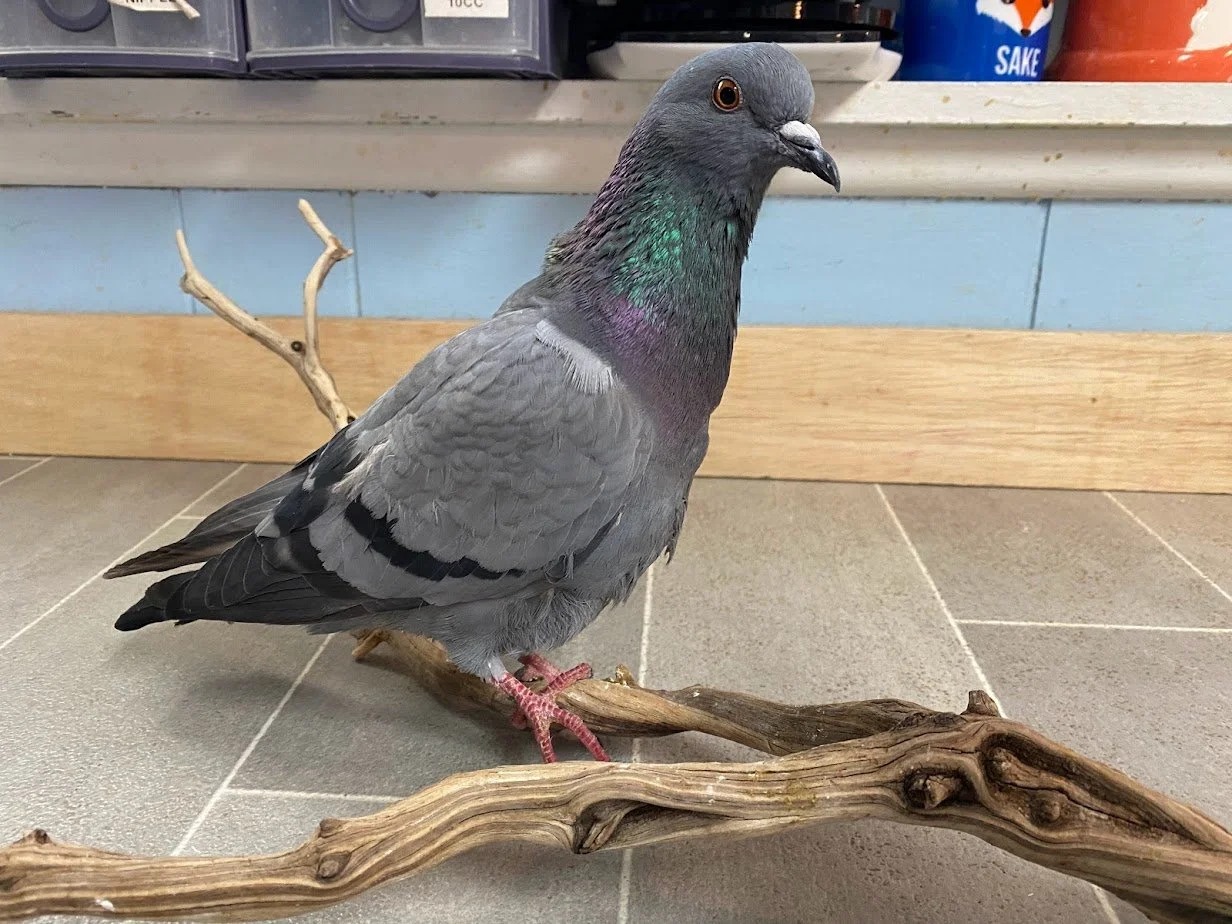
Hatched: Unknown
Arrived at WSWC: October 22, 2022
Sex: Male
Meet Buddy, our friendly Rock Pigeon ambassador! Hatched around September 2022, Buddy came to West Shore Wildlife Center in October 2022 from New Cumberland, PA, in poor health after being improperly raised by people. Because he was imprinted on humans at such a young age, Buddy lacks the survival skills needed to live safely in the wild. Today, he is healthy, thriving in our care, and uses his outgoing personality to teach volunteers and our social media about the intelligence, adaptability, and resilience of urban birds, as well as why wild baby birds should always be left to licensed rehabilitators.
All About Imprinting
Imprinting is a critical early learning process in which a young animal develops its sense of identity, typically by observing and bonding with its parents. Through imprinting, animals learn vital survival skills, including proper behaviors, vocalizations, and how to recognize a suitable mate later in life. When a wild baby animal is raised by people and imprints on humans instead of its own kind, it often cannot communicate with its own species and can become territorial or aggressive once it reaches maturity, making it unable to survive safely in the wild.
About Rock and Domestic Pigeons
Size: Usually range from 9-13 ounces (less than 1 pound)!
Lifespan: Typically live two to three years. Oldest known pigeon lived in captivity to be 31!
Diet: Pigeons, both in the wild and captivity, eat mostly seeds and occasionally fruit
Reproduction: Pigeons typically build nests on cliff sides but have adapted to use a variety of human made structures. Males choose a nest site and coo to attract their mate. With an average clutch size of one to three eggs, both parents incubate the eggs and feed their young a special regurgitated food called “crop milk.”
Range: Rock Pigeons live in the wild from southern Canada through South America. Domestic pigeons have been found all over the world for centuries. There are many other types of wild pigeons found in other habitats.
Other Facts: Rock Pigeons were introduced to the Americas in the 1600s from Europe. Homing Pigeons use a combination of senses, including the smell, sound, position of the sun and even Earth’s magnetic fields to help them find their way home when lost. Pigeons were first domesticated and bred into a variety of fancy breeds in Egypt more than 5,000 years ago. Pigeons are highly intelligent, making them desirable for sport, research and carrying messages.
Although the work of the wildlife center focuses on native wildlife, we have a soft spot in our hearts for pigeons, both domestic and wild. Few domestic rescues have the ability to care for pigeons or adopt them out to responsible homes. The wildlife center permanently cares for several homing and Fancy Pigeons that were discarded by their previous owners or their original homes.
Most of the domestic pigeons that are admitted at the wildlife center are rescued by caring individuals who find the birds alone outdoors. They are often suffering from old wing injuries, wounds, sores, dehydration and in emaciated condition. Generally, the birds have either been released for sport, such as pigeon races and shoots, or were released at ceremonial events, such as weddings and funerals. While some of the trained birds will make it back home, others find themselves lost in a wild world.
Resist the marketing techniques used by those trying to sell pigeon releases for weddings and other events. It isn't the magical moment it looks like. And if you're looking for a feathered company to add to your family, please choose adoption and consider adding a wonderful pigeon to your flock!